Are Smart Lock Security Certifications Worth Trusting?
Smart lock security certifications are confusing. Learn how to verify ANSI/BHMA grades, check cybersecurity testing, and confirm a certificate's scope.

Last Updated: November 18, 2026
Quick Summary
Evaluating smart lock security certifications means checking two separate columns: physical grades like ANSI/BHMA and EN 14846 that test forced entry and durability, and cybersecurity schemes that test encryption, authentication and firmware. A Grade 1 label says nothing about the app, and a cyber certificate says nothing about the deadbolt, so verify the certificate number against your exact model.
- ANSI/BHMA Grade 1 is the top tier for forced entry, cylinder strength and cycle durability.
- EN 14846 covers mechanical strength plus electrical function but not network or cloud behavior.
- Certificates are issued to a specific model and revision, not the whole product family.
- A firmware update or swapped radio module can move a lock outside its tested scope.
- Every lock needs a mechanical override that works without power or Wi-Fi.
Want a rental with secure self check-in?Homestay Getaway offers family-friendly Colorado Springs rentals with self check-in and private yards.Reserve Your Stay
Table of Contents
- What Smart Lock Security Certifications Actually Prove
- Smart Lock Security Standards You Will See on the Box
- How to Verify Smart Lock Certification Before You Buy
- Smart Lock Cybersecurity Testing: What Gets Tested and What Does Not
- Your Smart Lock Certification Checklist for the Store Aisle
- Where Certifications Fall Short: Failure Modes and Emergency Access
- Choosing a Smart Lock for Your Colorado Springs Rental
- Frequently Asked Questions
What Smart Lock Security Certifications Actually Prove
A smart lock certification is a third-party finding that a specific lock model met a defined test standard on the date it was tested. It is not a guarantee the lock is secure in your building, on your network, or against every attack.
The core problem is simple. A box can carry three logos and still leave you guessing. Each logo answers a different question.
Physical grade vs. cyber certification: two different claims
These two claim types get mixed together constantly. They should not be.
Physical security certification measures how long a lock resists force, picking, drilling, and repeated use.
Cybersecurity certification measures how a lock handles data: encryption, authentication, firmware updates, and the mobile app. It is a software and network claim.
A lock can pass the toughest physical grade and still ship with weak encryption.
Smart Lock Security Standards You Will See on the Box
Three families of standards show up most often on retail packaging and spec sheets. Knowing which one you are looking at helps you read each claim accurately.
- ANSI/BHMA grades. Grade 1, Grade 2, and Grade 3 rank door hardware by durability and resistance to attack. Grade 1 is the top tier. These grades come from the Builders Hardware Manufacturers Association and are certified through accredited laboratories. The tests are mechanical: cycle counts, torque and force applied to the cylinder and latch, and resistance to picking, drilling, and kick-in attempts. What the grade does not test is anything digital, no app, no radio, no firmware.
- EN 14846. A European standard for electromechanical locks. It covers both mechanical strength and electrical function, so it is broader than a pure hardware grade. It is still a lock-level standard, not a network or cloud standard, and a product certified to it is not automatically certified to any U.S. scheme.
- Cybersecurity schemes. These test the digital side: encryption, credentials, firmware signing, and cloud behavior. They are separate programs from the physical grades, run by different bodies, and they say nothing about whether the deadbolt survives a pry bar.
What each scheme tests, and what it excludes
- ANSI/BHMA Grade 1: Tests: Forced entry, cylinder and latch strength, cycle durability; Does not test: App, encryption, firmware, cloud
- ANSI/BHMA Grade 2: Tests: Mid-tier physical resistance and durability; Does not test: Any digital function
- ANSI/BHMA Grade 3: Tests: Basic residential durability; Does not test: Any digital function
- EN 14846: Tests: Mechanical strength plus electrical function of the lock; Does not test: Network behavior, cloud service, mobile app
- Cyber certification: Tests: Encryption, authentication, key management, firmware integrity, app and cloud posture; Does not test: Physical attack resistance, battery or power failure behavior
Can you compare grades across schemes?
Mostly no, and this is where buyers get fooled. A Grade 1 under ANSI/BHMA and a high grade under EN 14846 are not the same claim expressed in different units.
The same logic applies across the physical/cyber divide. A cyber certificate tells you the app encrypts traffic; it tells you nothing about the cylinder.
One trap: a Grade 1 label tells you nothing about the app. A cyber certificate tells you nothing about the deadbolt.
How to Verify Smart Lock Certification Before You Buy
Verification is a short job that is easy to skip. Here is a workflow you can use before trusting any certification claim.
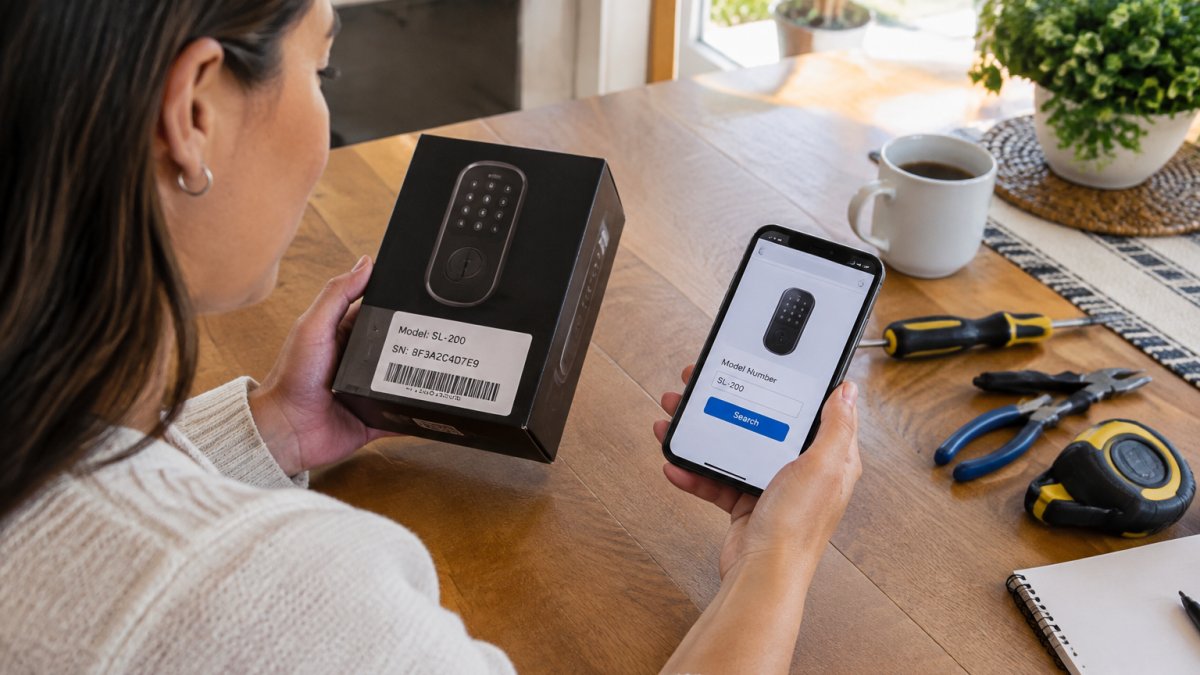
- Write down the exact model number. Not the product family name. The full model and firmware revision from the label.
- Find the certificate number. It should appear on the box, the spec sheet, or the manufacturer's compliance page.
- Look up the certifying body. Open the issuing organization's own directory, not the manufacturer's marketing page.
- Match the scope. Confirm the certificate lists your exact model and the standard edition cited.
- Check the date. Confirm the certificate is current, not expired or withdrawn.
- Save a copy. Keep the certificate PDF with your purchase records.
Matching the certificate to the exact model
This is where most verification fails. Certificates are issued to a model, sometimes to a hardware revision. A brand will certify one flagship lock, then print "certified" on the whole family.
Watch out: a certificate for model A does not cover model B, even when both sit on the same shelf with the same logo. If the certificate number and the model number do not match line for line, you have not verified anything.
Smart Lock Cybersecurity Testing: What Gets Tested and What Does Not
Cybersecurity testing for smart locks generally covers five areas: encryption of data in transit and at rest, authentication of users and devices, credential and encryption key management, firmware update integrity, and the security posture of the mobile application and cloud service.
What it usually does not cover is just as important:
- Your network. The lock's behavior on your Wi-Fi is your problem, not the lab's.
- Your guest habits. Shared codes and reused passwords defeat good cryptography.
- Integration risk. How the lock talks to a property management platform often sits outside the test scope.
If you run rentals, that last gap matters. Our vacation rental self check-in guide walks through how smart locks and digital keys work in a real rental setup, including where the security claims stop and your own access policy begins.
Your Smart Lock Certification Checklist for the Store Aisle
Use this checklist before you pay. It takes a few minutes and catches the common failures.
- Certificate number printed on the box or spec sheet
- Exact model number listed on the certificate
- Standard name and edition stated
- ANSI/BHMA Grade 1: What it covers: Forced entry, durability, cycle testing; What it does not cover: App security, encryption
- Grade 2: What it covers: Mid-tier physical resistance; What it does not cover: Cloud service, credentials
- Grade 3: What it covers: Basic residential durability; What it does not cover: Cyber risk of any kind
- EN 14846: What it covers: Mechanical plus electrical function; What it does not cover: Your network, your guest habits
- Cyber certification: What it covers: Encryption, authentication, firmware; What it does not cover: Physical attack resistance
Where Certifications Fall Short: Failure Modes and Emergency Access
Certifications test the lock on a bench, on the day it was tested, against the attacks the standard names. They do not test the morning your battery dies with a guest on the porch, and they do not stay valid forever. Two gaps matter most for rentals: failure-mode behavior and the certificate's own lifecycle.
Failure modes to plan for
- Dead batteries. Most locks warn you, but warnings get ignored. A keypad that dims or beeps is telling you the battery is near the end; a lock with no mechanical override turns that warning into a lockout. Plan a battery-replacement interval and a backup path that does not depend on the keypad.
- Network outages. Cloud-dependent locks can strand a guest when Wi-Fi drops. If the lock needs the cloud to validate a code, an outage is an access outage. Local code storage and a mechanical key are the fallbacks.
- Lost credentials. A deleted app or changed phone number can lock out the owner. Keep an owner-level credential that does not live only on one phone.
- Emergency egress. Every lock needs a mechanical way out that works without power. This is where security certification and building or fire requirements can pull in different directions: a lock chosen for forced-entry resistance still has to open from the inside on the way out, and no security certificate substitutes for checking that against your local code.
The certificate has a lifecycle
A certificate is a snapshot, not a permanent property of the product. Three things can quietly invalidate the claim you relied on:
- Expiration and withdrawal. Certificates expire and can be withdrawn. A current-looking badge on a box may sit on a certificate that lapsed.
- Factory surveillance. Many schemes require periodic factory audits to keep the certificate active (Follow-Up Services: Ongoing Onsite Certification Inspections). A certificate that is current on paper can still depend on surveillance you cannot see.
- Hardware and firmware revisions. A certificate covers the model and revision it names. A new firmware release, a swapped radio module, or a revised cylinder can move the product outside the tested scope. Ask whether the certificate still applies after the update you just installed.
That last point is the one most buyers miss. A lock that was certified at purchase can drift out of scope with a firmware update, and the badge on the box will not tell you. If you want to see how these failure modes play out in practice, our step-by-step guide to how self check-in works covers access methods and troubleshooting, and our vacation home emergency support tips cover rapid response when something goes wrong at an inconvenient hour.
Choosing a Smart Lock for Your Colorado Springs Rental
For a rental, the right lock balances verified physical grade, verified cyber scope, and a mechanical backup that works without power or Wi-Fi. Buy for the failure case, not the demo.
Three practical rules:
- Match the grade to the door. Exterior entries deserve the top tier you can justify.
- Demand the certificate number before you order, and match it to the model.
- Keep a mechanical key or override path for every lock.
If you are outfitting a property, our amenities checklist for Colorado Springs rentals shows how security fits alongside the features guests actually ask about, and you can browse our Colorado Springs vacation rentals to see how these decisions look in finished homes.
Certifications are worth trusting only as far as you verify them. A badge on a box is a claim; a matched certificate number, a current date, and a stated scope turn it into evidence.
Frequently Asked Questions
What certifications should I look for in a smart lock?
Look for an ANSI/BHMA grade (Grade 1, 2, or 3) for physical durability and forced-entry resistance, and a separate cybersecurity certification or test report for the electronic side. A lock can carry a high physical grade and still have weak encryption or outdated firmware. Check that the certificate names your exact model, not just the product family, and confirm the certifying body is accredited. Ask the seller for the certificate number and the standard edition used in testing.
Do smart lock certifications cover cybersecurity as well as physical security?
Usually not in one document. Physical certifications test things like cycle testing, impact resistance, and drill resistance. Cybersecurity testing looks at encryption, authentication, credential handling, and wireless communication. Some programs bundle both, but many do not. Read the certificate scope carefully: if it only lists mechanical tests, the app, Bluetooth, Wi-Fi, and cloud service have not been evaluated. Ask for a separate penetration testing report or cyber certification if remote access matters to you.
How can I verify that a smart lock certification is legitimate?
Start with the certificate number and the certifying body's name, then look up the listing in that body's public directory. Confirm the model identification on the certificate matches the label on the box exactly, including hardware revision. Check the standard edition cited, since an older edition may not cover current test methods. If the seller cannot produce a test report or a certificate number, treat the claim as marketing. A legitimate certification is verifiable in minutes.
Are smart locks with certifications more secure?
They are more predictable. A certification means an independent lab tested the lock against a published standard and the results fell within a defined grade. That reduces the chance of a surprise failure in forced entry, durability, or basic cyber hygiene. It does not guarantee the lock fits your door, that the firmware stays patched, or that the cloud service is well run. Pair the certificate with a threat model for your property and a plan for software updates and key management.
 Add homestaygetaway.com as a preferred source on Google →