
Is Booking Direct Cheaper Than Airbnb? A 2026 Guide
Is booking direct cheaper than Airbnb? See the real fee breakdown, hidden costs, and savings. Find out why direct reservations win. Reserve instantly.

Table of Contents
- Is Booking Direct Cheaper Than Airbnb? The Short Answer
- Airbnb Service Fees Explained: What You're Really Paying
- Direct Booking vs. Airbnb: Side-by-Side Price Comparison
- Hidden Costs in Online Travel Agencies Most Travelers Miss
- How to Find Direct Booking Websites for Vacation Rentals
- Is It Safe to Book Vacation Rentals Direct? Trust, Verification, and Protection
- Cancellation Policy Flexibility and Customer Support: Direct vs. Platform
- Why Booking Direct Is Cheaper Than Airbnb for Colorado Springs Stays
Last Updated: August 4, 2026
The question of whether booking direct is cheaper than Airbnb comes up constantly among travelers who've watched a reasonable nightly rate balloon into something far less reasonable at checkout. At Homestay Getaway, we see this confusion firsthand: guests arrive at our direct booking site after spotting one of our Colorado Springs properties on a major platform, then realize how much the final price differs. The short answer is yes, booking direct is almost always cheaper. Below, we'll show you exactly why the gap exists, what hidden costs you're absorbing on third-party platforms, and how to book with confidence when you skip the middleman.
Is Booking Direct Cheaper Than Airbnb? The Short Answer
Booking direct is cheaper than Airbnb in the vast majority of cases because you eliminate the platform's service fee layer entirely. That fee structure is the single biggest driver of the price gap between what a host sets as a nightly rate and what a guest actually pays at checkout.
Where the Price Difference Actually Comes From
Online travel agencies charge both hosts and guests to use their platforms. Those charges get embedded in the booking subtotal you see at checkout. When you book direct, neither fee exists. The host keeps more revenue, and the guest pays less for the same accommodation.
Many hosts practice rate parity, keeping their advertised nightly rate consistent across channels. The savings on a direct reservation don't always show up in the nightly rate line item, they show up when you compare the full checkout total, including all fees, against the direct booking price.
Airbnb Service Fees Explained: What You're Really Paying
Airbnb's fee structure is the most important thing to understand before evaluating whether booking direct is a genuine advantage. Airbnb charges fees to both sides of the transaction, distributing the cost of running the platform across every reservation.

Guest Service Fee vs. Host Service Fee
Airbnb operates under two distinct fee models. The most common for vacation rentals is the split-fee model, where guests pay a service fee on top of the booking subtotal and hosts pay a separate host service fee deducted from their payout. According to Airbnb's Help Center documentation on service fees, guest service fees typically vary based on the booking subtotal, with higher fees applying to lower-cost reservations. The combined effect is that the platform collects revenue from both parties on every transaction.
Other Charges That Push Up the Booking Subtotal
Beyond the service fee, several other charges inflate what you pay through a third-party platform:
- Cleaning fees: Often higher on platforms because hosts factor in the platform commission when pricing
- Occupancy taxes: Collected and remitted by the platform in many states, sometimes with additional processing markups
- Currency conversion fees: Applied when booking internationally
- Dynamic pricing surcharges: Platforms use algorithmic pricing that can spike rates during high-demand periods without the transparency a direct host would provide
The cumulative effect is a checkout total that can be meaningfully higher than what you'd pay booking the same property direct.
Direct Booking vs. Airbnb: Side-by-Side Price Comparison
The clearest way to evaluate whether booking direct is cheaper than Airbnb is to compare the two booking paths across every cost variable that affects the final price.
| Factor | Booking Direct | Booking via Airbnb |
|---|---|---|
| Guest service fee | None | Varies; often significant |
| Host commission | None passed to guest | Embedded in pricing |
| Cancellation flexibility | Negotiable with host | Platform-defined tiers |
| Loyalty/repeat guest discounts | Available from host | Not standard |
| Communication | Direct with host | Filtered through platform |
| Dispute resolution | Direct negotiation | Platform arbitration |
| Payment processing | Host's secure system | Airbnb's processor |
| Price transparency | Full breakdown upfront | Fees revealed at checkout |
Pros and Cons of Booking Direct
Pros:
- No guest service fee added to your booking subtotal
- Ability to negotiate rates, especially for longer stays or repeat visits
- Direct communication with the property owner or manager
- More flexible cancellation policy terms in many cases
- Loyalty programs and repeat guest perks that platforms don't offer
- Faster resolution when issues arise during your stay
Cons:
- Less built-in traveler protection compared to major platforms
- Requires more effort to verify the property and host independently
- Payment disputes must be handled directly rather than through a platform's arbitration system
- Some guests feel less secure without the platform's brand standing behind the transaction
Pros and Cons of Booking Through Airbnb
Pros:
- Built-in guest protection and AirCover coverage
- Centralized reviews and host verification
- Standardized cancellation policy tiers that are easy to compare
- Dispute resolution handled by a third party
Cons:
- Service fees add meaningful cost to every reservation
- Dynamic pricing algorithms can inflate rates without warning
- Communication goes through the platform, which can slow response times
- Less flexibility on cancellation terms outside the platform's defined tiers
- No loyalty rewards for repeat stays at the same property
Hidden Costs in Online Travel Agencies Most Travelers Miss
Most travelers focus on the nightly rate and the labeled service fee. The hidden costs are the ones that don't have their own line item.
Platform dynamic pricing is the biggest one. Online travel agencies use algorithmic pricing that adjusts rates based on demand signals, search behavior, and competitive positioning. A property you viewed on Monday may cost more when you return on Wednesday, not because the host changed anything, but because the platform's pricing engine detected increased search interest.
The second hidden cost is the impact of platform cancellation policies on your flexibility. When you book through a platform, your refund policy is determined by the platform's tier system, not by a direct conversation with the host.
According to the Federal Trade Commission's guidance on drip pricing and fee disclosure, fees that are not disclosed until the final checkout stage are a recognized consumer protection concern. The FTC has increasingly scrutinized the practice of advertising a low base price and revealing mandatory fees only at checkout, which is common across online travel agencies.
How to Find Direct Booking Websites for Vacation Rentals
Finding a host's direct booking website takes a few more steps than searching a major platform, but the process is straightforward. Start by searching the property name or address directly in Google. Many property managers operate their own direct booking sites alongside their platform listings.
Property management software has made direct booking infrastructure widely accessible to hosts. Tools like Lodgify and OwnerRez allow individual hosts to operate full-featured direct booking websites with integrated payment processing, calendar management, and guest communication.
Loyalty Programs, Repeat Guest Perks, and Direct-Only Deals
Booking direct opens up a category of savings that platforms structurally cannot offer: repeat guest relationships. When you book through a third-party platform, your loyalty is to the platform, not the property. The host has limited ability to reward you for coming back.
Direct booking relationships work differently. Many property managers offer returning guests discounted rates for repeat stays, priority access to high-demand dates, flexible check-in and check-out arrangements, complimentary upgrades when available, and direct communication that makes planning future trips easier. For families and groups who find a property they love, this is a significant long-term advantage.
Is It Safe to Book Vacation Rentals Direct? Trust, Verification, and Protection
Booking direct is safe when you take the right verification steps. The concern most travelers have is legitimate: platforms provide a layer of accountability that doesn't automatically exist in a direct transaction. But that accountability can be replicated through independent verification.
Verifying Property Legitimacy Before You Pay
Verification of property legitimacy is the most important step in any direct booking process. A legitimate property manager will have no objection to:
- Confirmed physical address: Verify the address exists and matches the photos using Google Street View or satellite imagery
- Independent reviews: Search the property name across multiple platforms to find guest reviews
- Direct phone or video call: A legitimate host will speak with you before a reservation
- Secure payment method: Reputable direct booking sites use established payment processors; wire transfers or cash-only requests are a red flag
- Business registration: For professional property managers, a quick search of state business registries confirms the entity is legitimate
The Better Business Bureau's guidance on vacation rental scams recommends verifying any direct booking property through independent channels before sending payment. The BBB specifically flags requests for payment via wire transfer, gift cards, or peer-to-peer apps as common fraud indicators.
Insurance, Liability Coverage, and Dispute Resolution
When you book through a major platform, the platform's guest protection policy covers certain damage claims and booking issues. When you book direct, that coverage doesn't apply by default.
What does apply: the host's own property insurance, any travel insurance you purchase independently, and the protections built into your credit card's purchase dispute process. Paying by credit card for a direct booking gives you chargeback rights under the Fair Credit Billing Act if the property materially misrepresents itself or fails to deliver the stay as described.
For dispute resolution, direct bookings rely on direct negotiation. A host who is responsive and communicative will resolve issues faster than any platform arbitration process.
Cancellation Policy Flexibility and Customer Support: Direct vs. Platform
Cancellation policy flexibility is one of the clearest advantages of booking direct. Platform cancellation tiers are standardized by design. A "flexible" policy on a major platform means a specific set of refund rules that apply to every property using that tier.
Direct booking relationships allow for genuine flexibility. A host who knows you've stayed before, or who you've communicated with directly, has the ability to accommodate a last-minute change in circumstances in a way that a platform policy simply cannot.
Customer support follows the same logic. Direct communication with a host means that when the WiFi goes out at 10 PM on a Sunday, you're calling or texting the person who manages the property, not submitting a ticket to a platform support queue.
Why Booking Direct Is Cheaper Than Airbnb for Colorado Springs Stays
For travelers planning a Colorado Springs vacation, the case for booking direct is particularly strong. The city draws families for Garden of the Gods, Pikes Peak, and outdoor attractions, which means multi-night group stays are common. The longer the stay and the larger the group, the more significant the fee savings become on a direct reservation.
Homestay Getaway properties in Colorado Springs are designed specifically for the kind of travel where direct booking makes the most sense: families and groups who need spacious homes with private yards, multiple bedrooms, and amenities like game rooms. These aren't one-night transient stays where platform convenience outweighs the fee cost.
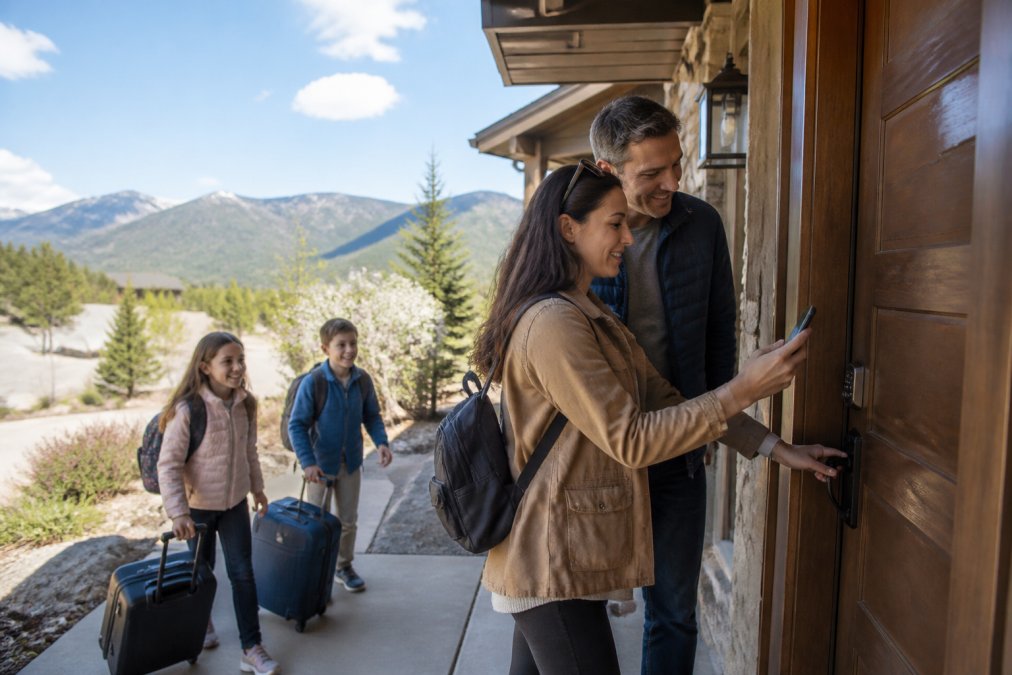
Direct booking at Homestay Getaway includes self check-in with a digital keypad, so arrival logistics are simple. Properties are pet-friendly with genuinely secure fenced yards, which matters for guests traveling with dogs. When you book direct, you're communicating with the property team directly, not through a platform messaging system.
For a group of 10 or 12 people staying several nights near Garden of the Gods, the difference between a platform checkout total and a direct booking total is not trivial. The fee savings alone cover a family dinner or a day of activities.
As documented in the American Hotel and Lodging Association's research on direct booking trends, travelers who book direct consistently report higher satisfaction with both pricing transparency and customer support responsiveness compared to platform-mediated bookings. The trust and safety concerns that make some travelers hesitant to book direct are addressable through verification. The cost savings are not addressable through any other method.
Frequently Asked Questions
Is booking direct cheaper than Airbnb for vacation rentals?
Yes, booking direct is typically cheaper than booking through Airbnb. Airbnb charges guests a service fee that is added on top of the nightly rate, cleaning fee, and security deposit. When you book directly with a property, those platform fees are removed from your booking subtotal. Many hosts pass those savings on to guests, which is why direct reservations often cost 10 to 15 percent less than the same property listed on a third-party platform. Always compare the total checkout price, not just the nightly rate.
What are the hidden fees on Airbnb compared to direct booking?
On Airbnb, the most common hidden charges include the guest service fee (a percentage added at checkout), the cleaning fee set by the host, and applicable taxes. Dynamic pricing can also push the nightly rate higher during peak dates. When you book direct, the fee structure is simpler: you typically pay the nightly rate, a cleaning fee, and taxes, with no platform commission layered on top. Price transparency is one of the biggest advantages of a direct reservation over an online travel agency.
Is it safe to book vacation rentals direct without Airbnb's guest protection?
Booking direct can be safe when you verify the property before paying. Check that the host has a professional direct booking website, read independent guest reviews, confirm a clear refund policy and cancellation policy in writing, and pay with a credit card for payment processing protection under the Fair Credit Billing Act. Reputable direct booking hosts also carry property liability insurance. The key difference is that dispute resolution shifts from the platform to direct communication with the host, so vetting the property and host upfront matters more.
How do I find direct booking websites for vacation rentals?
Search the property name or address directly in Google to see if the host runs an independent booking engine. Many hosts list their direct booking website URL in their platform bio or in post-stay emails. You can also search '[destination] vacation rental direct booking' to find property management companies that offer direct reservations. Once you find a direct booking site, look for secure payment processing, a clear cancellation policy, verified guest reviews, and a booking confirmation system before completing your reservation.
Do hosts prefer guests to book direct rather than through Airbnb?
Most hosts prefer direct bookings because Airbnb charges hosts a platform commission on every reservation, which reduces their earnings. When guests book direct, hosts keep more revenue and can reinvest it in property improvements or pass savings back to guests through lower rates or added perks like loyalty rewards and flexible cancellation policies. Direct bookings also allow hosts and guests to communicate freely before arrival, improving the overall traveler experience compared to messaging through a third-party platform.
Why are some travelers moving away from Airbnb for vacation rentals?
Travelers cite several reasons: service fees that significantly increase the total cost, inconsistent customer support when issues arise, and limited flexibility on cancellation policies set by the platform. Some guests also report that the final booking subtotal after fees looks very different from the advertised nightly rate, which feels like a lack of price transparency. Direct booking gives travelers clearer cost savings, direct host communication, and more control over their travel itinerary, which is why more budget-conscious travelers are seeking out direct reservation options.
Planning a Colorado Springs trip for a group or family means navigating accommodation costs that can escalate quickly when platform fees enter the equation. Homestay Getaway offers spacious, pet-friendly homes with private yards, game rooms, and self check-in, all available to reserve directly without the service fee layer that inflates platform checkout totals. Reserve instantly at Homestaygetaway.com and keep that fee savings where it belongs: in your travel budget.
This article was written using GrandRanker