Essential Gear for Dining Out With Dogs
Dining out with dogs: Pack smart for restaurant meals with your dog. Learn what gear, treats, and toys keep your pup calm and comfortable while you eat.

Table of Contents
- What to Bring When Taking Your Dog to a Restaurant
- Dog-Friendly Restaurant Etiquette and Preparation
- How to Keep a Dog Calm at a Restaurant
- Dog Enrichment Toys for Restaurants
- Hydration, Treats, and Nutrition During Dining
- Weather-Specific Gear and Patio Comfort
- Common Mistakes to Avoid When Dining Out With Your Dog
- Frequently Asked Questions
Last Updated: October 15, 2026
What to Bring When Taking Your Dog to a Restaurant
Dining out with dogs requires more than just showing up with your pet at a dog-friendly restaurant. You need the right gear. At Homestay Getaway, we help families plan pet-friendly vacations where dining out with your dog is part of the adventure. The essentials make the difference between a smooth meal and a stressful one.

The Core Packing List
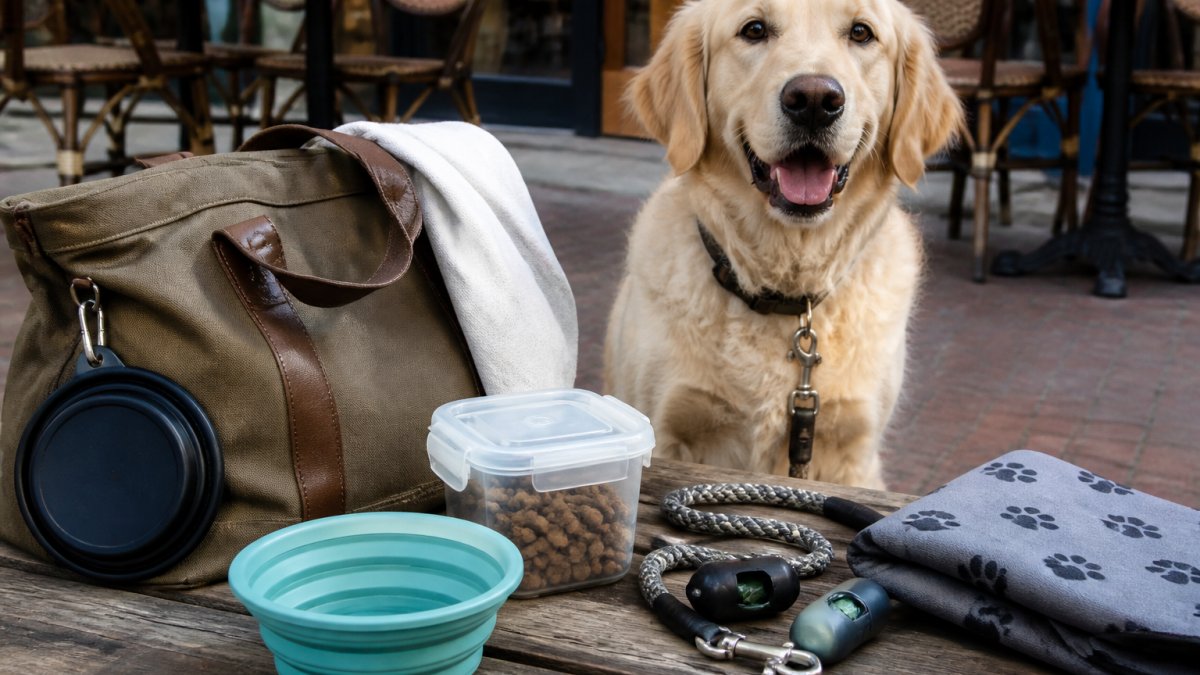
Start with the basics. A sturdy leash is non-negotiable. You'll also need a portable water bowl and fresh water. Bring treats for rewards and a toy for entertainment. A small towel helps with spills or muddy paws.
Here's what every outing needs:
- Leash (6-foot standard or shorter for tight spaces)
- Portable water bowl (collapsible to save space)
- Fresh water in a travel bottle
- High-value treats for positive reinforcement
- One interactive toy (food-stuffed or chew)
- Small towel or cleanup wipes
- Waste bags for accidents
- Vaccination records (some restaurants require proof)
Pack these items in a small bag you can keep under the table. The goal is staying prepared without cluttering the dining area. Most restaurants appreciate discretion.
Gear by Dog Size and Age
Smaller dogs under 25 pounds need different gear than larger breeds. Toy breeds and puppies require lighter leashes and smaller bowls. Giant breeds need reinforced equipment and more water.
Small dogs (under 25 lbs):
- Lightweight retractable leash (8-16 feet)
- Tiny collapsible bowl
- Soft chews or small treats
- Lap-sized toy
Medium dogs (25-60 lbs):
- Standard 6-foot leash
- Standard collapsible bowl
- Medium-sized chews
- Hand-sized toy
Large dogs (over 60 lbs):
- Heavy-duty 6-foot leash with reinforced clip
- Larger collapsible bowl
- Durable long-lasting chews
- Bigger interactive toy
Puppies under one year need extra consideration. They have shorter attention spans and tire quickly. Bring calming toys and plan for shorter dining periods. Senior dogs may need cushioned mats or blankets for comfort on hard patio floors.
Dog-Friendly Restaurant Etiquette and Preparation
Not every restaurant allows dogs. Many permit them only on outdoor patios. Understanding the rules before you arrive saves frustration and prevents awkward situations.
Checking Restaurant Policies Before You Go
Call ahead. Don't assume a restaurant is dog-friendly based on outdoor seating alone. Some establishments have strict no-pet policies. Others welcome dogs enthusiastically. A quick phone call takes two minutes and prevents wasted trips.
Ask these specific questions:
- Do you allow dogs on the patio?
- Are there size or breed restrictions?
- Do you have a designated dog-friendly seating area?
- Can I bring my own water bowl?
- Are there any other requirements?
Many restaurants now list pet policies online. Check their website or social media first. If you're staying at a vacation rental like those offered by Homestay Getaway, ask your host for local restaurant recommendations that welcome dogs. Hosts often know the best spots.
Choosing the Right Seating and Timing
Location matters. Request a quiet corner of the patio away from the main walkway. Avoid spots near the kitchen door or high-traffic areas. Your dog will stay calmer in a less chaotic environment.
Timing affects behavior too. Avoid peak dining hours. Go early for lunch or late for dinner. Fewer people means less stimulation and stress. Your dog eats better, and other diners enjoy their meals without distraction.
Choose shaded seating when possible. Direct sun stresses dogs. Heat makes them thirsty and uncomfortable. Patio heaters are fine, but avoid placing your dog directly underneath them. Look for natural shade from trees or restaurant umbrellas.
How to Keep a Dog Calm at a Restaurant
A calm dog makes for a pleasant dining experience. Preparation and training are key. Your dog won't suddenly behave well at a restaurant without practice.
Training and Obedience Foundations
Basic obedience skills are essential before dining out. Your dog needs to know "sit," "stay," and "down." These commands give you control when distractions appear.
Practice these commands at home first:
- Teach "sit" in a quiet room
- Practice "stay" for 30 seconds, then one minute
- Work on "down" on command
- Practice all three in busier environments
- Gradually increase distractions (other people, noise)
- Practice in outdoor spaces before restaurant visits
A dog that knows these commands stays focused on you, not other diners. Obedience builds confidence in both dog and owner. Your dog learns that calm behavior brings rewards.
Start training early. Puppies learn faster than adult dogs. If you have an older dog, training still works, it just takes longer. Consistency matters more than speed. Practice daily for best results.
Managing Stress and Overstimulation
Restaurants are overwhelming for dogs. New sounds, smells, and people create sensory overload. Watch for signs of stress: panting, pacing, whining, or pulling on the leash.
If your dog shows stress signals, take action:
- Offer a calming chew or toy
- Give a "down" command and reward compliance
- Move to a quieter spot if possible
- Take a short break and walk around the block
- Consider leaving early if stress escalates
Some dogs simply aren't ready for restaurant dining. That's okay. Start with quieter outdoor cafes. Work up to busier establishments as your dog's confidence grows. Forcing a stressed dog into an overstimulating environment damages their confidence and creates negative associations.
Dog Enrichment Toys for Restaurants
The right toy keeps your dog occupied during your meal. It redirects focus from other diners and provides mental stimulation.
Long-Lasting Chews and Food-Stuffed Options
Food-stuffed toys work best for restaurant settings. They keep dogs engaged for 20-30 minutes. Your meal stays peaceful while your dog works on the toy.
Popular options include:
- Kong Extreme (durable rubber toy, stuff with peanut butter or treats)
- Nylabone Power Chew (long-lasting, flavored chew)
- Bully stick (natural chew, high-value reward)
- Yak cheese chew (long-lasting, minimal mess)
- Frozen carrot stick (healthy, free option)
Freeze food-stuffed toys before leaving home. Frozen toys last longer and provide cooling relief on hot patios. Pack them in an insulated bag with ice packs.
Choose toys appropriate for your dog's size and chewing strength. A toy too soft breaks apart and creates a mess. A toy too hard risks tooth damage. Medium-durability options work best for most dogs.
Interactive and Quiet Toys
Some dogs prefer interactive toys over chews. These toys require active engagement but stay quieter than crunching on treats.
Good restaurant-friendly interactive toys:
- Puzzle toy (requires problem-solving to release treats)
- Snuffle mat (hide treats in fabric folds for sniffing)
- Rubber ball with treat dispenser (roll and chase for rewards)
- Tug toy (quiet engagement without noise)
Avoid squeaky toys. They annoy other diners and escalate excitement. Skip toys with loud rattles or crinkly sounds. Silent engagement is the restaurant rule.
Rotate toys to maintain novelty. A toy your dog ignores at home becomes fascinating at a restaurant when it's new. Save special toys exclusively for dining outings.
Hydration, Treats, and Nutrition During Dining
Your dog needs water throughout the meal. Dehydration happens quickly, especially on warm patios. Offer water every 10-15 minutes during your stay.
Pack a portable water bowl that collapses flat. Set it on the ground beside your table. Refill from your travel water bottle.
Treats serve two purposes: reward good behavior and keep your dog occupied. Choose high-value treats your dog loves.
Plain vanilla ice cream makes a simple treat on hot days. Many restaurants offer a "Pup Cup", a small cup of whipped cream or plain ice cream. Ask if your restaurant participates.
Avoid giving your dog table scraps. Human food often upsets dog stomachs and reinforces begging behavior. Stick to dog-appropriate treats.
Weather-Specific Gear and Patio Comfort
Weather changes how you prepare for dining out with dogs. Hot days require different gear than cool evenings.
Summer heat:
- Extra water (double your normal amount)
- Collapsible bowl for frequent refills
- Shaded seating (essential, not optional)
- Cooling mat or wet towel
- Lighter-colored leash (absorbs less heat)
- Shorter outing duration
Cool weather:
- Blanket or mat for comfort on cold pavement
- Dog sweater if your breed is sensitive to cold
- Standard water bowl (frozen water less of a concern)
- Longer outings possible
Rainy conditions:
- Waterproof leash or backup leash
- Towel for drying paws
- Covered patio seating
- Shorter visit (wet dogs get uncomfortable quickly)
Extreme temperatures make restaurant dining uncomfortable for dogs. On very hot days, skip outdoor dining. Wait for cooler hours. On freezing days, keep visits brief. Your dog's comfort matters more than your meal experience.
Common Mistakes to Avoid When Dining Out With Your Dog
Most problems stem from poor preparation. Knowing what to avoid prevents 90% of restaurant dining disasters.
Mistake 2: Bringing an untrained dog. A dog without basic obedience commands creates chaos.
Mistake 3: Choosing peak hours. Busy restaurants stress dogs and frustrate other diners.
Mistake 4: Forgetting water. Dehydrated dogs pant, whine, and stress. Bring more water than you think necessary.
Mistake 6: Ignoring stress signals. A stressed dog doesn't magically relax. Remove your dog from the situation.
Mistake 7: Allowing table scraps. Human food upsets dog stomachs and teaches begging. Stick to dog-appropriate treats.
Mistake 8: Using retractable leashes with large dogs. These leashes lack control in crowded spaces.
Dining out with your dog takes planning, but the reward is worth it.
When you're planning a vacation that includes dining out with your dog, Homestay Getaway offers spacious pet-friendly vacation rentals with private yards where your dog can relax between outings. Our properties near local attractions provide the perfect base for exploring while keeping your dog comfortable. Learn more about pet-friendly travel accommodations and book your next adventure today.
Frequently Asked Questions
What's the most important gear to bring when taking your dog to a restaurant?
A collapsible water bowl and fresh water are non-negotiable, dehydration happens fast, especially on warm days. A well-fitted leash or harness ranks second; it keeps your dog secure and prevents accidents. Food-stuffed toys or long-lasting chews come third; they occupy your dog while you eat and reduce the chance of unwanted behavior or begging at the table. Beyond these three, pack treats for positive reinforcement and a portable waste bag for accidents.
How do I keep my dog calm while dining at a restaurant?
Start with obedience training before the outing, your dog should know down, stay, and leave it reliably. At the restaurant, choose quieter seating away from walkways and high foot traffic. Bring a food-stuffed toy or chew to redirect focus. Reward calm behavior with treats frequently. If your dog shows signs of stress (panting, pacing, whining), take a short walk break. Never punish anxious behavior; instead, create positive associations with the environment through treats and praise.
What enrichment toys work best for keeping a dog occupied at an outdoor restaurant?
Long-lasting chews like bully sticks or yak chews keep dogs engaged for 30+ minutes without mess. Food-stuffed toys (Kong, Nylabone) stuffed with peanut butter or frozen treats offer mental stimulation and reward. Avoid toys with squeakers or balls that roll under tables and create chaos. For smaller or senior dogs, softer, slower-release options like a lick mat or treat-dispensing puzzle toy work better. Rotate toys every 10 minutes if your dog loses interest quickly.
How far in advance should I check if a restaurant allows dogs?
Call or check the restaurant's website at least 24 hours before your visit. Ask specifically about their dog policy, whether dogs are allowed on the patio only, and if there are size or breed restrictions. Some restaurants welcome service dogs but not pet dogs. Others allow dogs only at certain times or seasons. Confirming ahead prevents disappointment and ensures you're not turned away at the door with your pup in tow.